


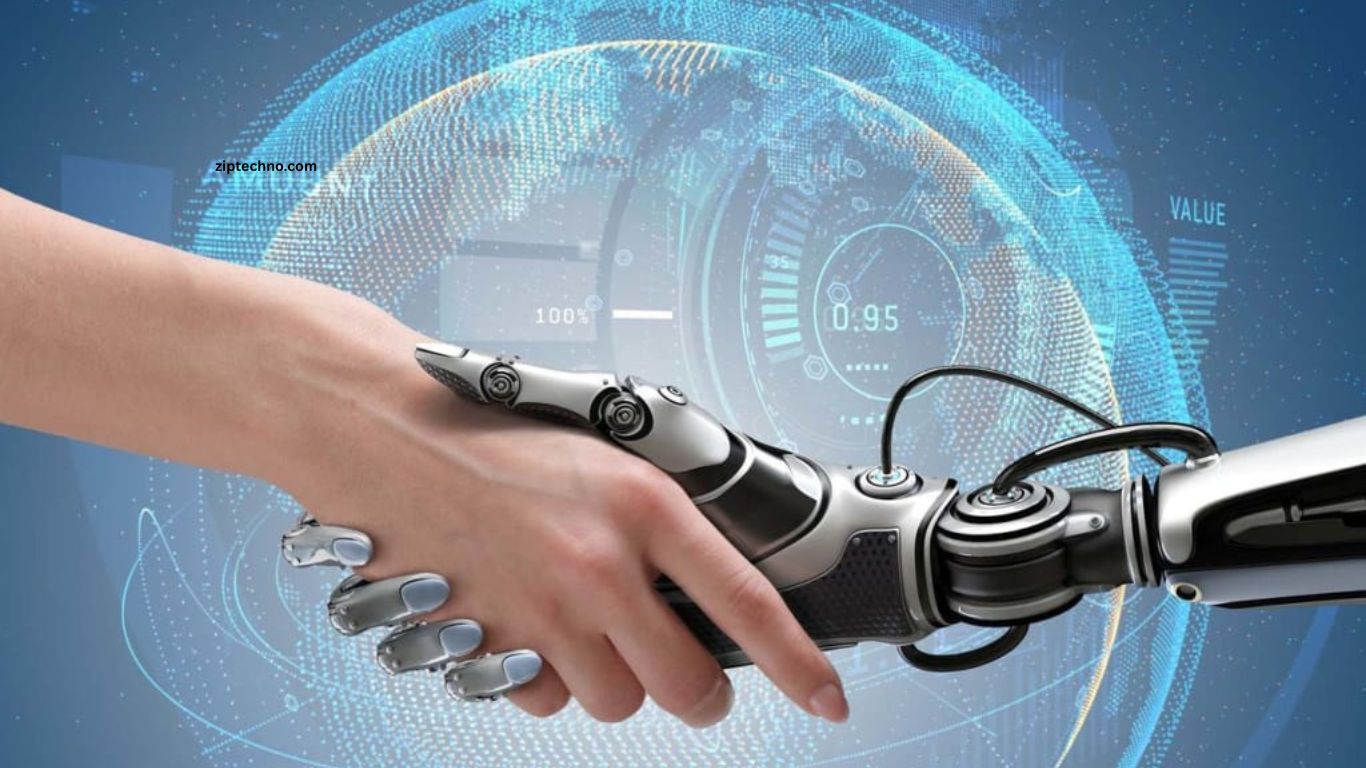
Technology continues to reshape how people work, communicate, learn, and solve everyday problems. Innovations are moving beyond experimental concepts and becoming practical tools for businesses and consumers. From artificial intelligence and robotics to quantum computing and advanced connectivity, the next generation of technology will create major opportunities across different industries.
Understanding future technology trends can help individuals and businesses prepare for changing demands, discover new opportunities, and make smarter technology decisions. The following trends are especially worth watching as innovation continues to accelerate.
Read More: The Latest AI Developments Explained
Artificial Intelligence Becoming More Advanced
Artificial intelligence is expected to remain one of the most influential technology trends in the coming years. AI systems are becoming better at understanding language, analyzing information, generating content, and supporting complex decision-making.
Generative AI is also expanding beyond text generation. Modern systems can create images, videos, audio, software code, and business content. Companies are increasingly integrating AI into customer service, marketing, healthcare, education, cybersecurity, and software development.
The future of AI will focus on more personalized, efficient, and autonomous systems. AI assistants may handle complex tasks, coordinate workflows, and provide real-time recommendations with minimal human input.
The Growth of AI Agents
AI agents represent an important development within artificial intelligence. Unlike traditional AI tools that respond to individual commands, AI agents can perform multi-step tasks based on a specific goal.
For example, an AI agent could research information, organize data, prepare a report, communicate with software systems, and complete related tasks automatically. This technology could significantly improve productivity across businesses and professional environments.
As agentic AI becomes more reliable, organizations may use digital agents as virtual team members capable of handling repetitive and complex workflows.
Quantum Computing Moving Forward
Quantum computing is another technology trend worth following closely. Unlike traditional computers, quantum computers use quantum principles to process certain types of information in fundamentally different ways.
Quantum computing could eventually contribute to breakthroughs in areas such as drug discovery, materials science, optimization, cryptography, and financial modeling. Although large-scale practical applications remain challenging, research and investment continue to advance the field.
The technology may not replace conventional computers, but it could become an important tool for solving problems that are extremely difficult for traditional computing systems.
Robotics Becoming More Capable
Robotics is moving into a new phase as artificial intelligence improves machine perception, decision-making, and movement. Modern robots can perform increasingly sophisticated tasks in factories, warehouses, hospitals, laboratories, and other environments.
Humanoid robots are also attracting significant attention. Future robots may assist with logistics, manufacturing, household tasks, healthcare support, and dangerous industrial work.
The combination of robotics and AI could create machines capable of adapting to changing environments rather than performing only predefined actions.
The Expansion of 5G and Future Connectivity
Fast and reliable connectivity will remain essential as more devices become connected. 5G networks are already supporting applications that require high speeds and low latency, while research into future wireless technologies continues.
Advanced connectivity can support smart cities, autonomous systems, connected vehicles, remote services, industrial automation, and immersive digital experiences. As network infrastructure improves, businesses will gain more opportunities to build services that depend on real-time communication.
Future connectivity will likely focus not only on speed but also on reliability, coverage, energy efficiency, and support for billions of connected devices.
Extended Reality and Immersive Experiences
Virtual reality, augmented reality, and mixed reality are creating new ways to interact with digital information. These technologies can combine physical environments with computer-generated content, creating more immersive experiences.
Businesses can use extended reality for training, product demonstrations, remote collaboration, education, design, and entertainment. As hardware becomes more comfortable and software improves, immersive technology could become more practical for everyday professional use.
The future may bring digital environments that feel increasingly natural and interactive, changing how people learn, work, and communicate.
Edge Computing Supporting Real-Time Technology
The growth of connected devices is increasing demand for faster data processing. Edge computing addresses this challenge by processing information closer to where it is generated instead of sending every piece of data to distant data centers.
This approach can reduce latency and improve performance for applications such as autonomous vehicles, smart factories, healthcare systems, surveillance infrastructure, and connected devices.
As AI and IoT adoption grows, edge computing will become increasingly important for applications that require rapid decisions and reliable performance.
The Rise of Sustainable Technology
Environmental concerns are encouraging companies to develop more sustainable technologies. Innovations in renewable energy, energy storage, electric transportation, smart buildings, and efficient computing are gaining importance.
Green technology can help reduce energy consumption and support more efficient use of natural resources. Data centers, for example, are exploring better cooling systems and energy-efficient infrastructure as computing demand continues to increase.
Sustainability will increasingly influence technology development, product design, and business investment decisions.
Cybersecurity Powered by AI
As digital systems become more sophisticated, cybersecurity will become even more important. Artificial intelligence can help security teams identify unusual behavior, detect potential threats, and respond to attacks more quickly.
At the same time, cybercriminals can also use advanced technology to create more sophisticated attacks. This creates an ongoing competition between defensive and offensive technologies.
Future cybersecurity strategies will likely combine AI-powered monitoring, stronger authentication, automated threat detection, and improved data protection.
Biotechnology and Digital Healthcare
Technology is transforming healthcare through artificial intelligence, wearable devices, advanced diagnostics, telemedicine, and personalized treatment approaches.
Wearable technology can continuously collect information about physical activity and other health-related measurements, while AI can assist professionals in analyzing large amounts of medical data.
Future developments in biotechnology could also improve drug discovery, genetic research, medical imaging, and personalized healthcare. The combination of computing power and biological science could create significant advances in medicine.
Smart Homes and Connected Devices
Smart home technology is becoming more integrated and intelligent. Connected lighting, security systems, appliances, thermostats, and entertainment devices can communicate through digital platforms.
Future smart homes may use AI to understand routines and automatically optimize energy use, security, comfort, and household operations. Instead of controlling individual devices manually, users may interact with a unified intelligent system. This development could make connected homes more convenient while also improving energy efficiency.
Why These Technology Trends Matter
Future technology trends are more than emerging innovations. They can influence employment, business models, education, healthcare, communication, and everyday life.
Individuals who understand these developments can better prepare for changing career requirements and digital environments. Businesses can also identify emerging opportunities before technologies become mainstream.
The most important approach is not to follow every new technology blindly. Instead, it is useful to understand which innovations solve real problems, create measurable value, and have the potential for long-term adoption.
Frequently Asked Questions
What is the most important future technology trend?
Artificial intelligence is one of the most influential trends because it is transforming businesses, software, healthcare, and everyday tasks.
How will AI change the future?
AI will automate tasks, improve decision-making, personalize services, and support professionals across many industries.
Is quantum computing the future?
Quantum computing has significant potential for solving complex problems in medicine, science, finance, and cybersecurity.
Why is robotics becoming important?
AI-powered robots can perform repetitive, dangerous, and complex tasks, improving productivity and workplace safety.
What role will 5G play in future technology?
5G enables faster, more reliable connectivity for smart devices, autonomous systems, connected vehicles, and industrial applications.
Why should businesses follow technology trends?
Following technology trends helps businesses identify new opportunities, improve efficiency, remain competitive, and prepare for future market changes.
Conclusion
Future technology will continue to evolve rapidly, creating new possibilities across almost every part of modern life. Artificial intelligence, AI agents, robotics, quantum computing, advanced connectivity, extended reality, cybersecurity, biotechnology, and sustainable technology are among the most important areas worth following.

1 Comment
Pingback: Tech Companies Making Big Moves This Year - ZipTechno